Have you ever written a sentence and realized you used another way to say due to again and again? It happens to many writers. Whether you are writing an email, an essay, a message, or even a social media caption, repeating the same phrase can make your writing feel dull.
The good news is that English offers many natural and expressive alternatives. By learning another way to say due to, you can make your sentences clearer, more professional, and more engaging.
In this guide, you will discover practical alternatives you can use in everyday writing. These phrases are perfect for emails, essays, blog posts, WhatsApp messages, and even Instagram captions. You will also learn how to use them naturally so your writing sounds smooth and human.
Let’s explore the best ways to replace due to and make your writing stronger.
Because Of – The Most Natural Alternative
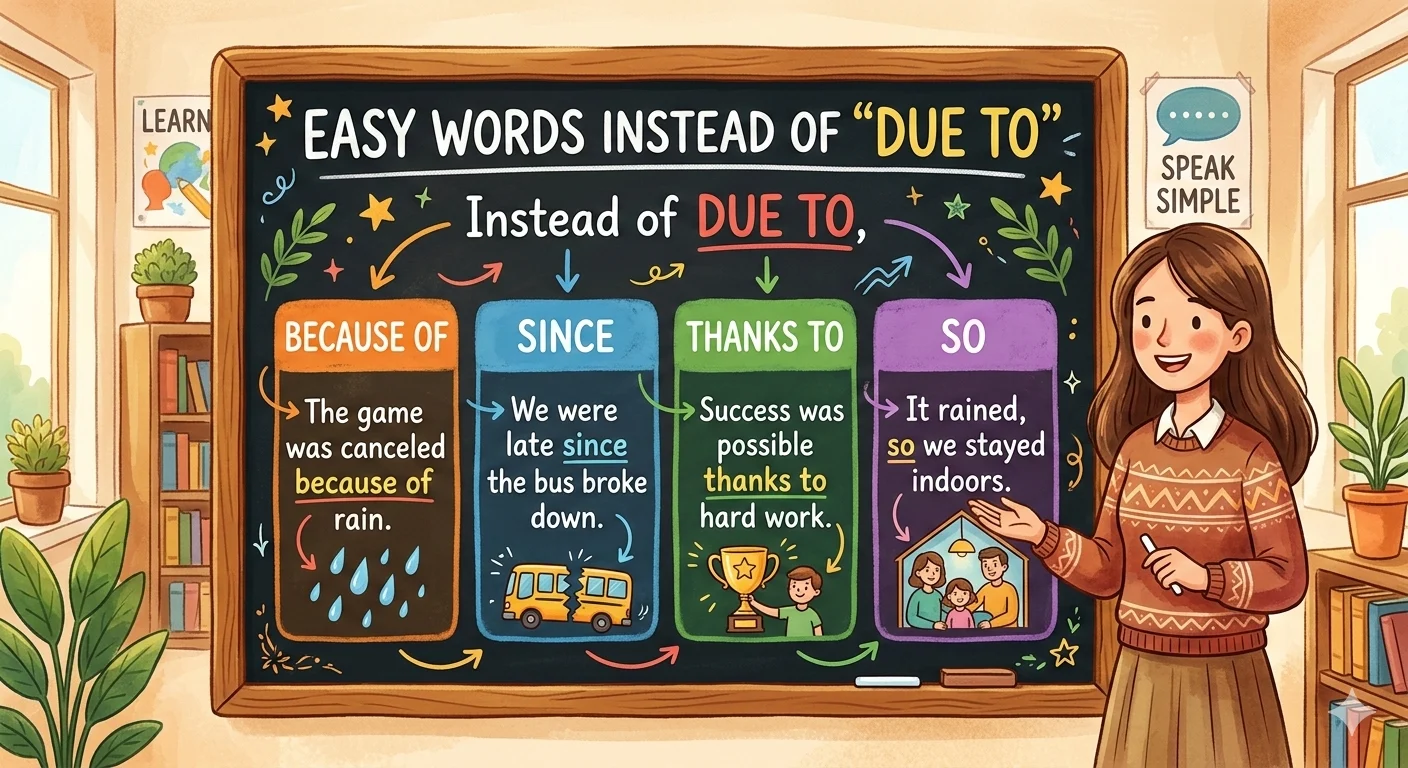
One of the easiest ways to replace another way to say due to is the phrase because of. It sounds natural and works well in both casual and professional writing.

In fact, language experts often recommend it because it flows better in conversation. According to many writing guides, people tend to understand sentences faster when they use simple phrases like because of.
Here are some examples you can use:
- The meeting was canceled because of heavy rain.
- She missed the train because of traffic.
- The event was delayed because of technical issues.
- The team succeeded because of strong teamwork.
- Flights were postponed because of bad weather.
- The store closed early because of maintenance work.
- He improved quickly because of consistent practice.
- The project failed because of poor planning.
- Schools were closed because of a public holiday.
- The website slowed down because of high traffic.
- Sales increased because of smart marketing.
- The match ended early because of rain.
Because of meaning: it simply explains the reason something happened.
As a Result Of – A Professional Writing Choice
If you are writing an essay, report, or formal document, as a result of can replace another way to say due to smoothly.

It sounds slightly more formal and works well in professional contexts.
Examples include:
- The company expanded as a result of strong demand.
- The road was closed as a result of construction work.
- Productivity increased as a result of better tools.
- The delay occurred as a result of system updates.
- Many businesses changed strategies as a result of market trends.
- The project succeeded as a result of teamwork.
- Attendance dropped as a result of bad weather.
- Costs increased as a result of inflation.
- The event moved online as a result of travel restrictions.
- The problem occurred as a result of a software error.
- The team improved as a result of training.
- The plan changed as a result of new information.
Today, professionals often use this phrase in reports and workplace communication.
Thanks To – A Positive Alternative
Sometimes the reason behind something is positive. In those cases, thanks to works beautifully as another way to say due to.
Unlike other phrases, this one usually highlights a good result.
Examples:
- The project succeeded thanks to great teamwork.
- The event was memorable thanks to amazing volunteers.
- The website grew quickly thanks to loyal readers.
- The party was fun thanks to good music.
- Sales improved thanks to a new marketing strategy.
- The trip was enjoyable thanks to perfect weather.
- Students succeeded thanks to supportive teachers.
- The campaign worked thanks to creative ideas.
- The show became popular thanks to social media.
- The business grew thanks to customer trust.
- The plan succeeded thanks to careful preparation.
- The launch went smoothly thanks to planning.
Fun fact: Positive language like this increases reader engagement online.
Owing To – A Polished and Formal Option
In academic or formal writing, owing to is often used as another way to say due to.

It sounds polished and professional.
Examples:
- The flight was canceled owing to bad weather.
- The event was postponed owing to safety concerns.
- Production stopped owing to equipment failure.
- The match ended early owing to rain.
- Prices increased owing to supply shortages.
- Traffic slowed owing to construction work.
- The delay happened owing to technical problems.
- The program changed owing to new policies.
- Work paused owing to maintenance issues.
- The launch moved owing to unexpected delays.
- The schedule shifted owing to staff changes.
- The meeting ended early owing to time limits.
Many academic writers prefer this phrase in research papers.
On Account Of – A Formal Explanation
Another polished expression similar to another way to say due to is on account of.
It appears often in professional writing and formal communication.
Examples:
- The store closed on account of renovations.
- Flights were delayed on account of fog.
- The event moved online on account of travel issues.
- Production slowed on account of supply shortages.
- Work stopped on account of safety checks.
- The meeting ended early on account of time constraints.
- The program paused on account of system updates.
- Traffic slowed on account of road repairs.
- The delay occurred on account of technical errors.
- The event changed on account of new regulations.
- The team rescheduled on account of weather conditions.
- Services stopped on account of maintenance.
This phrase is common in business writing.
As a Consequence Of – Strong Academic Alternative
If you are writing an essay and need another word for due to in an essay, try as a consequence of.

It sounds analytical and works well in academic discussions.
Examples:
- The economy slowed as a consequence of inflation.
- The forest changed as a consequence of climate shifts.
- Productivity dropped as a consequence of poor planning.
- Attendance declined as a consequence of travel issues.
- The policy changed as a consequence of public feedback.
- The company restructured as a consequence of losses.
- The team improved as a consequence of new training.
- Pollution increased as a consequence of urban growth.
- Spending decreased as a consequence of rising costs.
- Production slowed as a consequence of supply issues.
- The research expanded as a consequence of new findings.
- Demand grew as a consequence of online trends.
This phrasing is popular in essays and reports.
The Reason For This Is – Clear Explanation Style
Sometimes you want to explain a cause more clearly. Instead of repeating another way to say due to this, you can simply say the reason for this is.
Examples:
- The reason for this is poor planning.
- The reason for this is lack of preparation.
- The reason for this is sudden weather changes.
- The reason for this is a system error.
- The reason for this is strong customer demand.
- The reason for this is a change in strategy.
- The reason for this is limited resources.
- The reason for this is growing competition.
- The reason for this is increased interest online.
- The reason for this is improved technology.
- The reason for this is effective teamwork.
- The reason for this is higher expectations.
This style helps when explaining something step by step.
Caused By – Direct and Clear
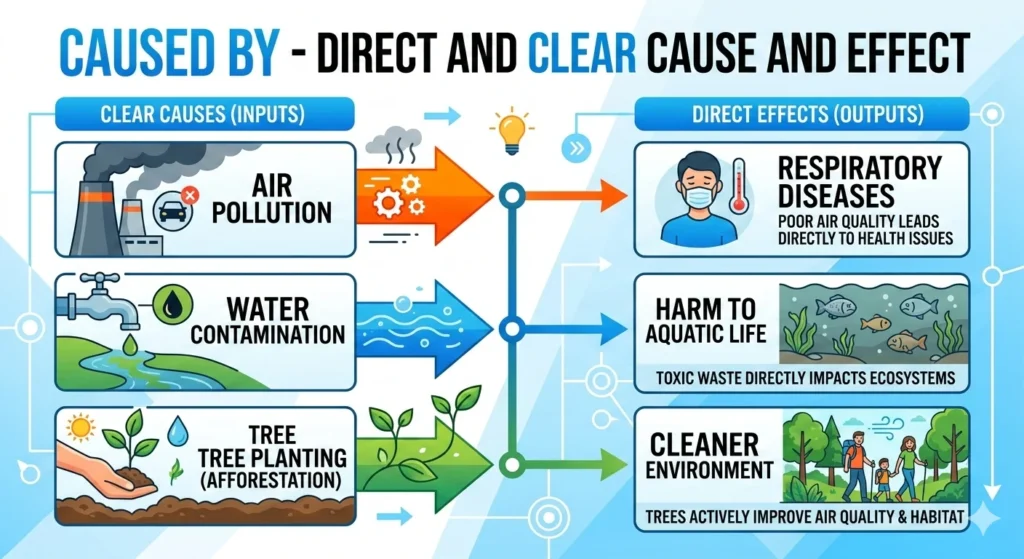
Another strong replacement for another way to say due to is caused by.
It directly explains the source of a situation.
Examples:
- The delay was caused by traffic.
- The error was caused by a software bug.
- The damage was caused by heavy rain.
- The issue was caused by outdated software.
- The change was caused by new policies.
- The slowdown was caused by network problems.
- The accident was caused by poor visibility.
- The failure was caused by lack of testing.
- The noise was caused by construction work.
- The delay was caused by technical issues.
- The improvement was caused by better tools.
- The success was caused by teamwork.
Clear cause-and-effect writing improves readability and trust.
Quick FAQ About “Due To”
Define due to
“Due to” means something happened because of a specific reason or cause.
Another word for due to the fact
You can use because, since, or as a result of.
Another way to say due to in email
Professional options include because of, as a result of, and owing to.
Due to antonyms
Opposite phrases include despite, regardless of, and in spite of.
How do you say due to professionally?
Common professional alternatives include as a result of, owing to, or on account of.
Conclusion
Using another way to say due to can instantly improve your writing. Instead of repeating the same phrase, you now have many alternatives like because of, thanks to, as a result of, and owing to.
Each option adds variety and clarity to your sentences. Whether you are writing emails, essays, blog posts, or social media captions, these phrases help your message sound more natural and engaging.
The next time you write a sentence with due to, try replacing it with one of these alternatives. Small changes like this make your writing smoother, more professional, and easier for readers to enjoy.

Kent Haruf is a dedicated author at Replyera.com, creating heartfelt wishes, thoughtful replies, and meaningful messages that resonate with real emotions.”