Have you ever stared at your screen wondering what’s another way to say additionally without repeating yourself again and again? You’re not alone. Whether you’re writing an essay, drafting a professional email, or polishing academic research, repeating the same transition word can make your writing feel flat.
In this guide, you’ll discover fresh, natural, and powerful alternatives to another way to say additionally—from heartfelt everyday expressions to polished academic phrases. I’ll also show you how to use them in essays, emails, and formal writing. You can copy these for WhatsApp captions, LinkedIn posts, research papers, or greeting cards. Let’s make your writing smoother, smarter, and more expressive.
Another Way to Say Additionally in an Essay
When writing academically, variety matters. If you’re asking, what is another way to say additionally in an essay, here are strong and natural options:
- Furthermore
- Moreover
- In addition
- What is more
- Not only that
- Along with this
- On top of that
- Coupled with
- Equally important
- As well
- Besides this
- Added to this
- In the same vein
- To expand on this
- Beyond that
If you’re wondering, how do you say “furthermore” professionally, it’s often replaced with “Moreover” or “In addition,” depending on tone.
For example:
Instead of “Additionally, students benefit from practice,” try:
“In addition, students benefit from regular practice.”
Academic writing values smooth transitions. According to global university writing guides, clear transition words improve readability and help examiners follow arguments more easily.
Another Way to Say Additionally in Email
Professional emails require clarity and confidence. If you’re searching for another way to say additionally in email, these work beautifully:
- Also
- Besides that
- On top of that
- Further to this
- What’s more
- As discussed
- In addition to this
- I would also like to mention
- Let me also add
- Additionally, please note (formal tone)
- Alongside this
- Moreover, kindly note
- I’d like to highlight
- Equally important
- In continuation
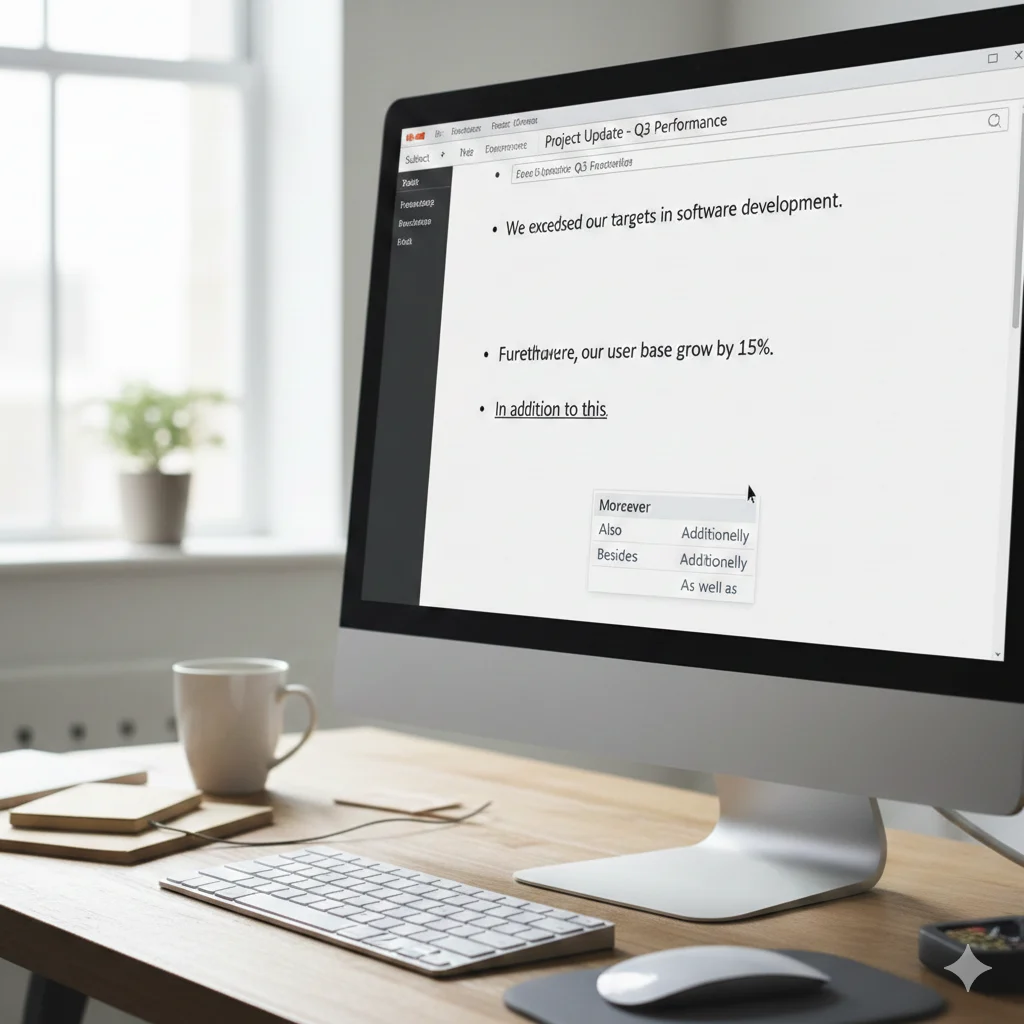
Another word for additionally in an email depends on tone. “Also” works for friendly emails. “Moreover” sounds more formal.
Example:
“Also, please find the attached report.”
Or
“Moreover, the updated figures are included.”
In modern workplaces, especially remote teams, short and clear transitions are preferred. A LinkedIn workplace communication survey found that concise emails improve response rates significantly.
Another Word for Additionally in Research Writing
If you’re writing a thesis or journal article, repeating additionally can weaken your authority. Here are research-friendly synonyms for additionally transition words:
- Furthermore
- Moreover
- In addition
- Additionally (sparingly)
- Notably
- Importantly
- It is worth noting
- Complementing this
- Supporting this
- Expanding on this
- In line with this
- Consistent with
- Together with
- Similarly
- Correspondingly
Another word for additionally in research often depends on logical connection. For emphasis, use “Importantly.” For support, use “Supporting this.”
For example:
“Importantly, the data supports previous findings.”
“Supporting this, recent studies indicate…”
Academic tone should sound confident, not repetitive.
Using Additionally at the Beginning of a Sentence
Many writers ask: Can I use additionally in the beginning of a sentence? Yes—but don’t overuse it.

Here are smoother alternatives for sentence openings:
- In addition,
- Furthermore,
- Moreover,
- What’s more,
- On top of that,
- Beyond this,
- Equally,
- Likewise,
- Not only that,
- Added to that,
- Another key point is,
- It’s also worth mentioning,
- One more thing,
- Let’s not forget,
- To add to this,
Example:
“In addition, the policy improves efficiency.”
If you’re wondering whats another way to say additionally at the start of a sentence, “In addition” is usually the safest option.
Moreover Meaning & Furthermore Meaning Explained Simply
Sometimes we use words without fully understanding them. Let’s simplify.
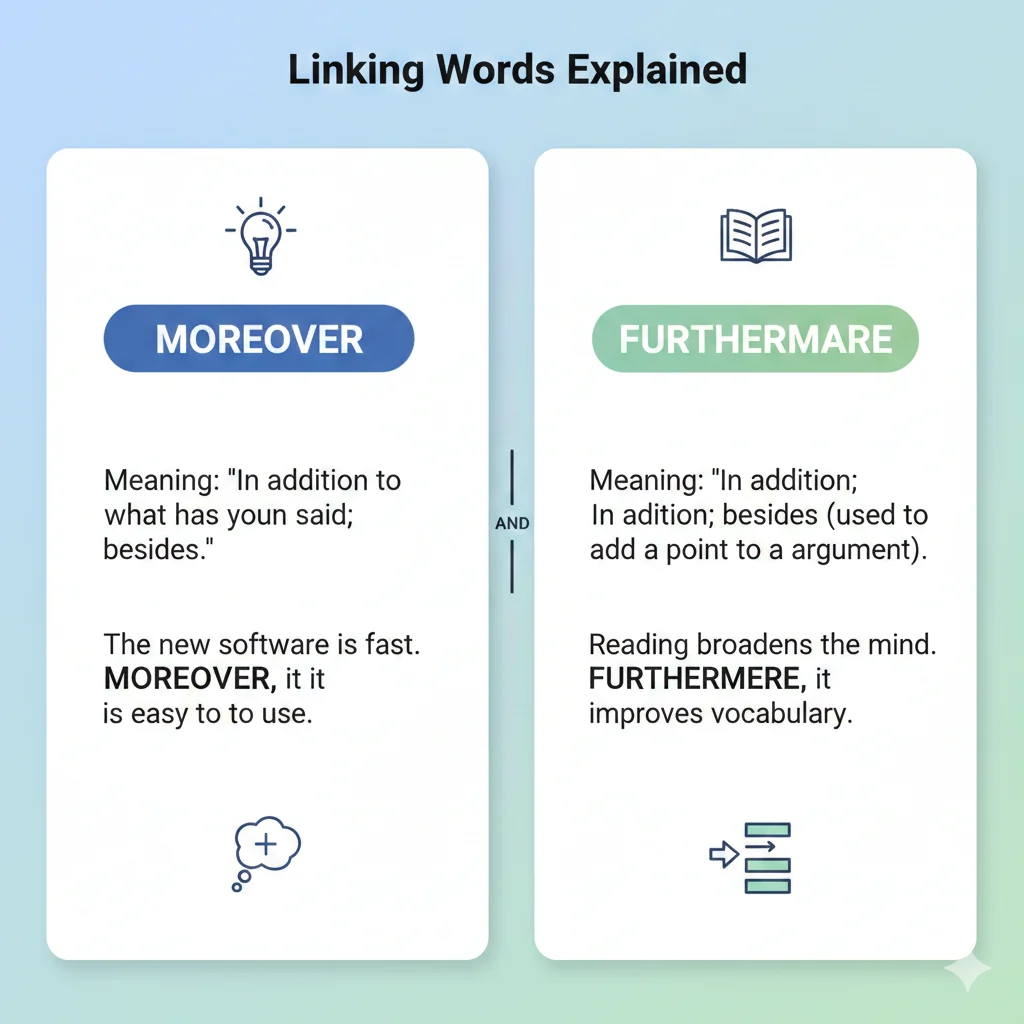
Moreover meaning: It adds stronger emphasis. It suggests something important follows.
Furthermore meaning: It adds supporting information. Slightly formal.
Simple replacements:
- Moreover → What’s more
- Furthermore → Also
- Additionally → Plus
For example:
“Moreover, the results exceeded expectations.”
“What’s more, the results exceeded expectations.”
The meaning stays powerful but sounds more human.
Casual & Friendly Alternatives to Additionally
Not every sentence needs to sound academic. If you’re chatting, blogging, or posting on social media, try these:

- Plus
- And also
- Not to mention
- As a bonus
- On top of everything
- Another thing
- Guess what
- By the way
- And there’s more
- Let’s not forget
- Even better
- Here’s the best part
- What’s cool is
- And that’s not all
- There’s more
When writing blogs, especially conversational ones, these feel warmer and more engaging than formal transitions.
For example:
“Plus, it’s completely free.”
“And that’s not all—it works instantly.”
Readers today prefer natural tone over robotic phrasing.
Professional & Polished Synonyms for Additionally
If you want authority and clarity, especially in business writing, try these polished phrases:
- In addition to this
- As well as
- Further to our discussion
- Complementing this
- Alongside this initiative
- Over and above
- Building on this
- As a continuation
- Coupled with this
- Together with
- Supplementing this
- In conjunction with
- Concurrently
- At the same time
- Equally significant
These work especially well in reports and proposals.
For example:
“Building on this strategy, we expanded globally.”
If you’ve ever asked what’s another way to say additionally professionally, this list covers your needs.
Another Way to Say Additionally in a Sentence (With Examples)
Let’s look at practical examples so you can see how each fits naturally.
Instead of:
“Additionally, the product is affordable.”

Try:
- The product is affordable. Plus, it’s durable.
- The product is affordable. What’s more, it lasts for years.
- The product is affordable. In addition, it includes free support.
- The product is affordable and comes with free shipping.
- The product is affordable. Not only that, it’s eco-friendly.
- The product is affordable. On top of that, it’s easy to use.
- The product is affordable. Furthermore, it’s energy-efficient.
- The product is affordable. Moreover, it saves time.
- The product is affordable. Added to this, it has warranty coverage.
- The product is affordable. Beyond that, customer reviews are excellent.
- The product is affordable. Let me also mention its design.
- The product is affordable. Equally important, it’s reliable.
- The product is affordable. Another key benefit is speed.
- The product is affordable. Supporting this, data shows high satisfaction.
- The product is affordable. Importantly, it’s safe.
Context decides the best choice.
Conclusion
Words matter more than we think. Choosing another way to say additionally helps your writing feel alive, confident, and natural. Whether you’re drafting an academic essay, sending a professional email, or writing research, the right transition word keeps your ideas flowing smoothly.
Don’t be afraid to experiment. Mix formal phrases with conversational ones depending on your audience. Strong writing isn’t about using complicated words—it’s about using the right words.
Start using these alternatives today and watch your sentences feel clearer, warmer, and more professional.
FAQs
What is another way to say additionally in an essay?
You can use “Furthermore,” “Moreover,” “In addition,” or “What is more.”
How do you say furthermore professionally?
Use “Moreover,” “In addition,” or “Building on this.”
Another word for additionally in research?
Try “Importantly,” “Supporting this,” or “Notably.”
Can I use additionally at the beginning of a sentence?
Yes, but avoid overusing it. Alternatives like “In addition” work well.

“David Szalay is a thoughtful author at Replyera.com, crafting meaningful wishes, smart replies, and expressive messages that turn emotions into powerful words.”