Have you ever been writing an email, essay, social media post, or even a simple message and found yourself using the word “things” over and over again?
You’re not alone. While “things” is a common and useful word, repeating it can make your writing sound vague or less engaging.
The good news is that there are many better alternatives depending on the situation. Whether you’re looking for a professional way to say things, a stronger word for essays, or simply want to improve your everyday communication, this guide has you covered.
In this article, you’ll discover practical and easy-to-use alternatives, examples, and expressions that can instantly make your writing clearer and more powerful.
You can use these suggestions for emails, academic writing, business communication, social media captions, presentations, and daily conversations.
What Can I Say Instead of Things?
If you’ve ever asked yourself, what can I say instead of things?, the answer depends on the context. The word “things” often acts as a placeholder when we can’t think of a more specific word.
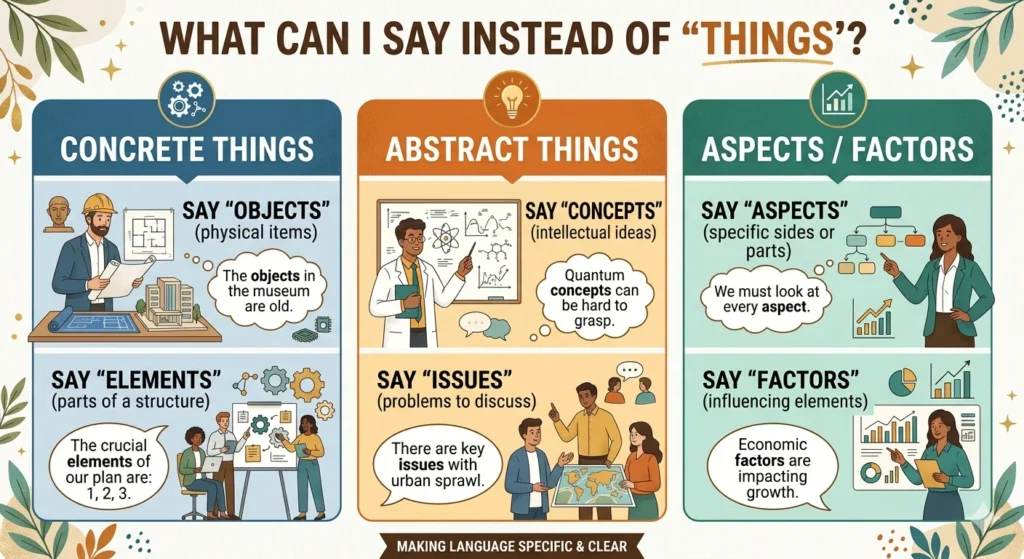
Here are some useful alternatives:
- Items
- Objects
- Elements
- Factors
- Aspects
- Details
- Components
- Features
- Topics
- Matters
- Points
- Concepts
- Ideas
- Subjects
- Resources
Examples
- Instead of: There are many things to discuss.
- Try: There are many topics to discuss.
- Instead of: Several things affected the results.
- Try: Several factors affected the results.
- Instead of: We learned many things.
- Try: We learned many concepts.
What Is a Better Word for Things in Professional Writing?
When writing reports, business emails, or presentations, using specific vocabulary creates a stronger impression. Many people search for a professional way to say things because they want their communication to sound more polished.
Use these alternatives:
- Considerations
- Objectives
- Priorities
- Deliverables
- Components
- Requirements
- Initiatives
- Strategies
- Elements
- Outcomes
- Resources
- Procedures
- Recommendations
- Operations
- Measures
Examples
- Things to consider → Key considerations
- Things to do → Action items
- Things to know → Important information
- Things to remember → Key reminders
- Things that matter → Critical priorities
A survey by various business communication experts consistently shows that concise and specific language improves reader engagement and comprehension, especially in workplace settings.
Another Word for Things in an Essay
Academic writing often benefits from precise language. If you’re looking for another word for things in an essay, these options work particularly well.
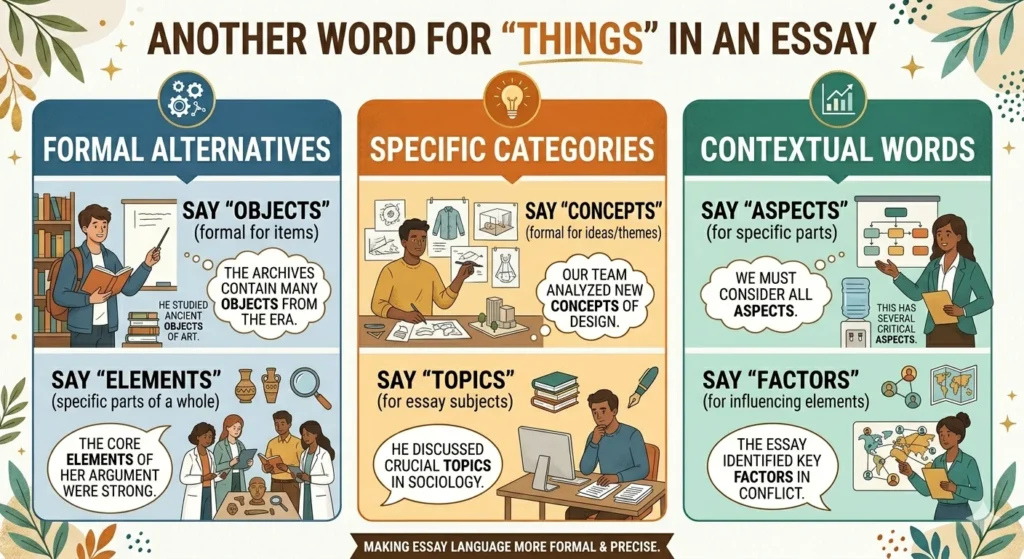
- Factors
- Issues
- Elements
- Components
- Aspects
- Concepts
- Variables
- Themes
- Principles
- Characteristics
- Phenomena
- Topics
- Subjects
- Considerations
- Findings
Examples
- Many things influence success.
- Many factors influence success.
- Several things were observed.
- Several phenomena were observed.
- Important things should be analyzed.
- Important elements should be analyzed.
Using specific terms helps improve clarity and demonstrates stronger writing skills.
Things Synonym Formal: Words That Sound More Sophisticated
Many readers search for a things synonym formal because they want vocabulary that sounds educated without being difficult to understand.
Consider these formal alternatives:
- Matters
- Considerations
- Components
- Elements
- Factors
- Circumstances
- Aspects
- Conditions
- Provisions
- Attributes
- Principles
- Specifications
- Features
- Variables
- Requirements
Example Sentences
- Several matters require attention.
- Various factors contributed to the outcome.
- Multiple elements must be reviewed.
- Certain circumstances affected the decision.
- These requirements are essential.
The key is choosing a word that accurately describes what you’re talking about rather than automatically replacing every use of “things.”
Another Word for Things or Stuff to Say
Many people struggle to find the right words during conversations. If you’re searching for another word for things or stuff to say, these alternatives can help.
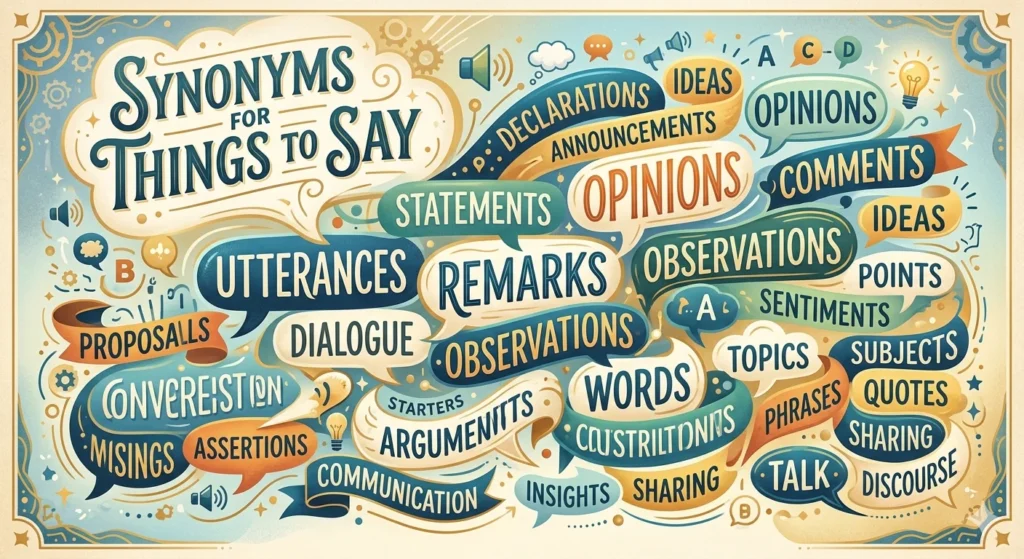
- Comments
- Remarks
- Statements
- Observations
- Thoughts
- Ideas
- Suggestions
- Opinions
- Messages
- Responses
- Questions
- Insights
- Expressions
- Perspectives
- Feedback
Examples
- I have a few things to say.
- I have a few thoughts to share.
- She shared interesting things.
- She shared interesting insights.
- He said some important things.
- He made some important observations.
These alternatives sound more natural and specific in conversations and writing.
Another Word for Things in Life
Life is full of experiences, lessons, and moments. Instead of repeatedly saying “things in life,” try these richer expressions.
- Experiences
- Moments
- Challenges
- Opportunities
- Lessons
- Events
- Journeys
- Milestones
- Memories
- Adventures
- Blessings
- Circumstances
- Achievements
- Relationships
- Transitions
Examples
- Good things happen.
- Positive experiences happen.
- Things in life teach us lessons.
- Life experiences teach us lessons.
- Things will get better.
- Circumstances will improve.
- Better days are ahead.
- Positive changes are coming.
Many cultures around the world use hopeful phrases and encouraging expressions to remind people that difficult moments are temporary.
Another Word for Things That Happen
If you’re writing about events or situations, there are often better choices than simply saying “things happen.”
Here are some alternatives:
- Events
- Occurrences
- Situations
- Developments
- Incidents
- Circumstances
- Experiences
- Outcomes
- Changes
- Happenings
- Episodes
- Moments
- Conditions
- Results
- Cases
Examples
- Unexpected things happen.
- Unexpected events occur.
- Strange things happen sometimes.
- Unusual situations arise sometimes.
- Good things happen every day.
- Positive developments occur every day.
These substitutions help your writing sound more precise and engaging.
Another Way to Say Things to Consider, Things to Know, and Things to Remember
These common phrases appear frequently in blogs, presentations, and business documents. Here are stronger alternatives.
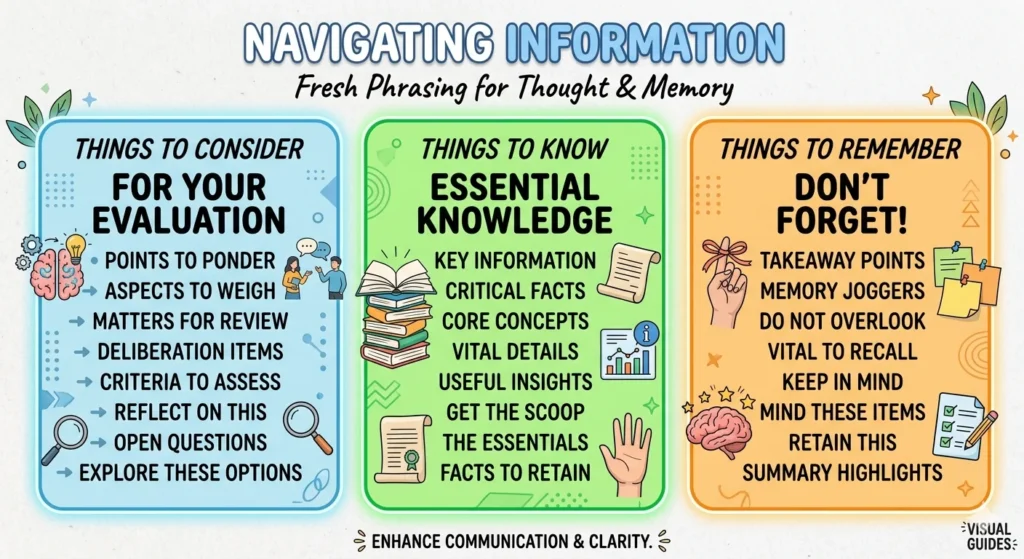
Things to Consider
- Key considerations
- Important factors
- Essential points
- Critical aspects
- Relevant details
- Strategic priorities
- Valuable insights
- Decision-making factors
- Important elements
- Key concerns
Things to Know
- Essential information
- Key facts
- Important details
- Helpful insights
- Useful knowledge
- Critical information
- Core concepts
- Fundamental facts
- Valuable guidance
- Key takeaways
Things to Remember
- Key reminders
- Important notes
- Essential points
- Helpful tips
- Valuable lessons
- Critical reminders
- Important takeaways
- Useful guidance
- Key insights
- Core principles
These alternatives instantly make articles and reports appear more professional.
Another Way to Say Phrase, Common Expressions, and Everyday Alternatives
Language evolves constantly. Social media, professional communication, and online content have encouraged people to find fresher ways to express ideas.
Here are some useful replacements for common expressions.
Another Way to Say Phrase
- Expression
- Saying
- Statement
- Remark
- Quote
- Wording
- Term
- Idiom
- Message
- Description
Another Way to Say Things Like
- Similar concepts
- Comparable ideas
- Related examples
- Comparable situations
- Similar expressions
- Related topics
- Equivalent terms
- Matching examples
- Comparable elements
- Similar instances
Another Way to Say Things in Common
- Shared interests
- Similarities
- Common traits
- Mutual characteristics
- Shared qualities
- Common ground
- Mutual interests
- Shared experiences
- Similar features
- Shared values
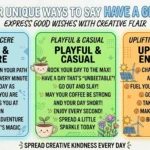
Another Way to Say “I Hope You Have a Great Day”
- Wishing you a wonderful day.
- Enjoy your day ahead.
- Have an amazing day.
- Hope your day is filled with happiness.
- Sending positive vibes your way.
- Have a fantastic day.
- Wishing you a productive day.
- Hope today brings you joy.
- Enjoy every moment today.
- Have a beautiful day ahead.
These alternatives help your messages feel more personal and memorable.
Frequently Asked Questions
What is a fancy way of saying things?
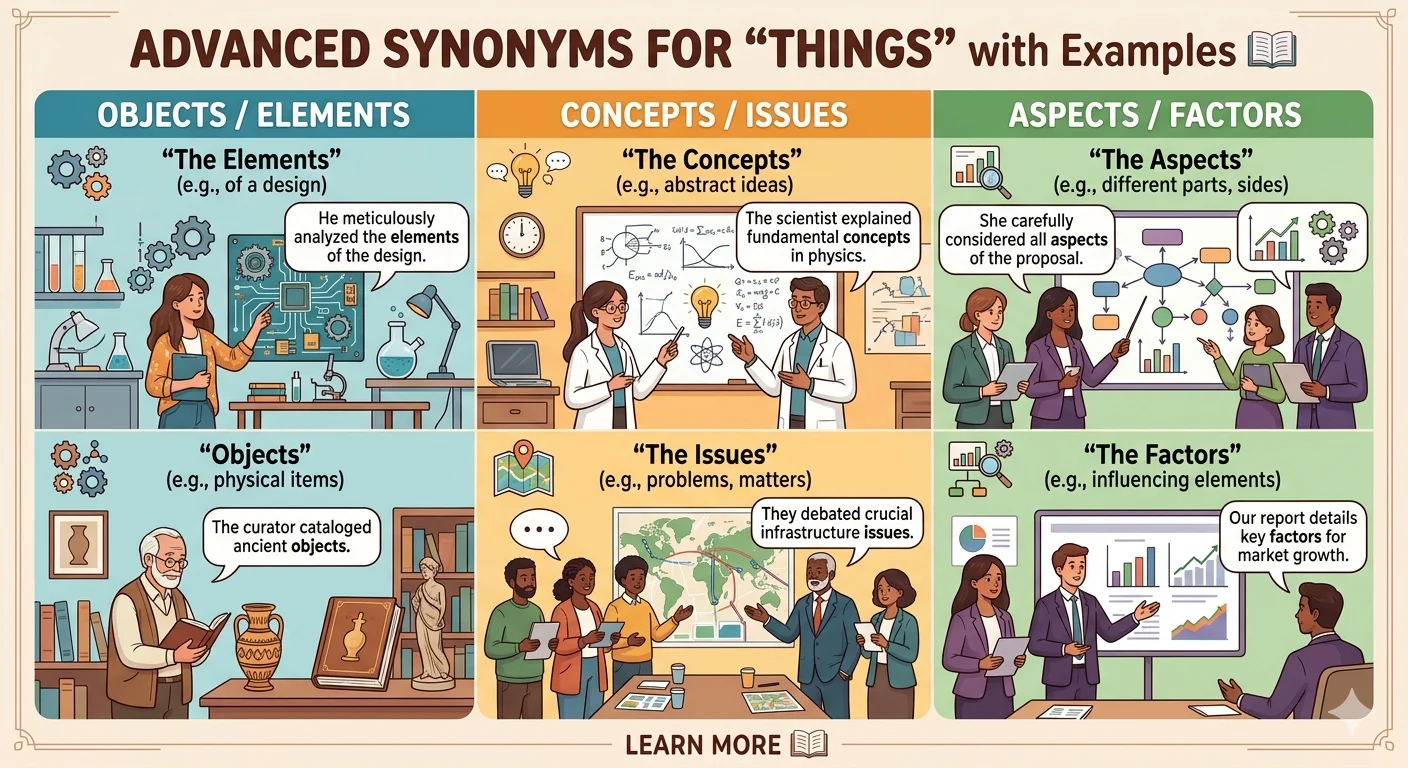
Some sophisticated alternatives include elements, factors, components, aspects, considerations, matters, and phenomena.
What’s a better way to say things?
The best replacement depends on context. For example, use “factors” for causes, “topics” for discussions, and “experiences” for life events.
Another word for things in science?
Scientific writing often uses:
- Variables
- Phenomena
- Elements
- Components
- Organisms
- Materials
- Factors
- Processes
- Systems
- Structures
What is another way to say things happen?
You can say:
- Events occur
- Situations arise
- Developments take place
- Circumstances unfold
- Changes occur
Conclusion
Finding another way to say things can dramatically improve your writing and communication. Whether you’re creating professional emails, academic essays, social media posts, or everyday messages, choosing specific words makes your ideas clearer and more engaging.
Instead of relying on the word “things,” try using alternatives like factors, aspects, elements, experiences, topics, or considerations. Small vocabulary upgrades can make a big difference in how your message is received. Save this guide for future reference, and don’t hesitate to experiment with different expressions until you find the words that perfectly match your meaning.
FAQ
What can I say instead of things?
You can use words like factors, aspects, elements, items, topics, concepts, experiences, details, or considerations depending on the context.
What is a fancy way of saying things?
Formal alternatives include matters, components, circumstances, phenomena, attributes, and considerations.
What is a better word for things?
The best substitute depends on what you’re describing. Factors, elements, experiences, topics, and aspects are among the most useful options.
What’s another way to say things?
You can replace “things” with more specific words such as ideas, details, events, concepts, issues, or resources.

“Sylvia Townsend Warner is a creative author at Replyera.com, known for writing heartfelt wishes, thoughtful replies, and expressive messages that feel genuine.”