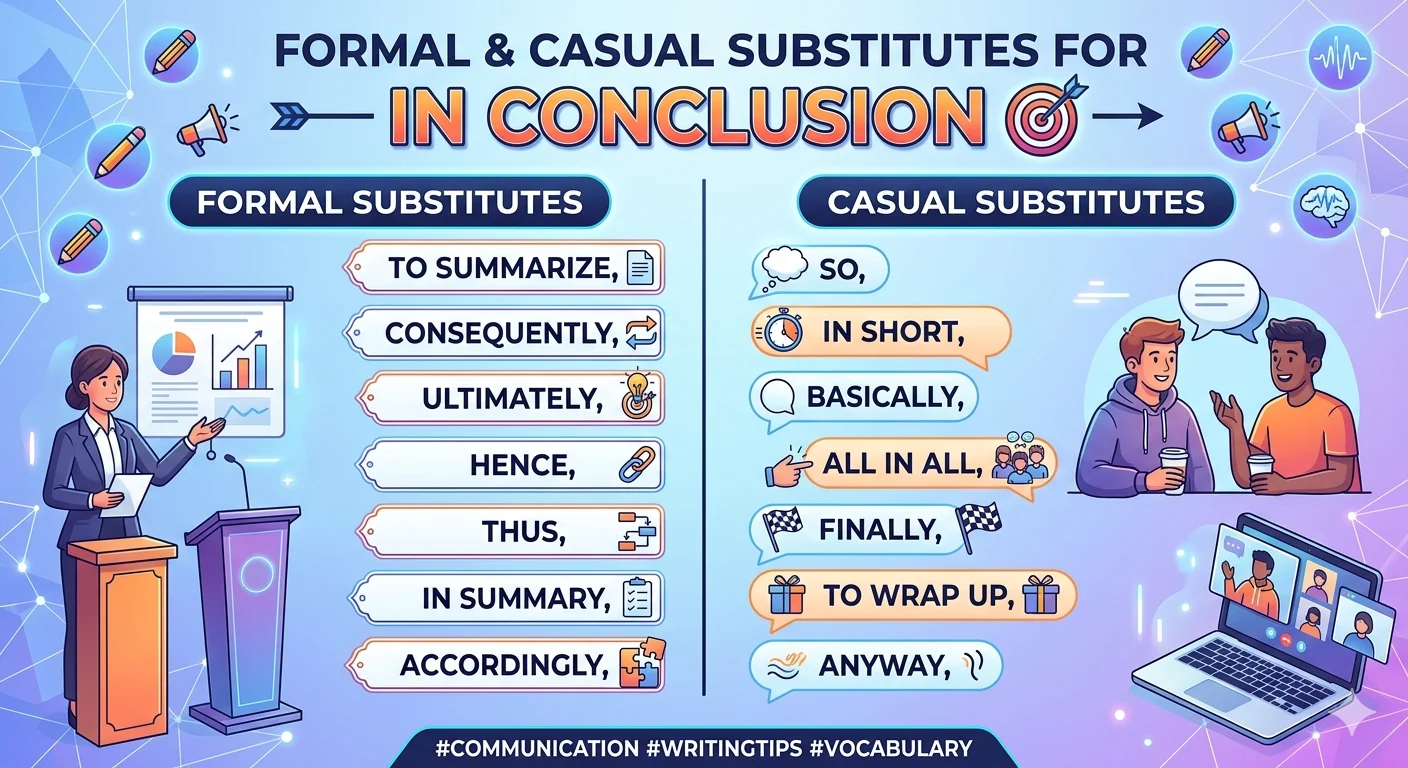
Finding the right words to end your writing can make a big difference. The phrase other way to say in conclusion is searched by students, writers, professionals, and speakers who want their final thoughts to sound more polished and meaningful.
While “in conclusion” is commonly used, repeating the same phrase can make your writing feel ordinary. Choosing fresh alternatives can help your essays, reports, speeches, emails, and blog posts leave a stronger impression.
In this guide, you will discover heartfelt, professional, and creative ways to close your ideas naturally. These phrases can be used in academic writing, research papers, presentations, social media captions, and everyday communication.
Other Ways to Say In Conclusion Professionally
Professional writing often needs a strong ending that summarizes ideas clearly. Whether you are preparing a business report, article, or presentation, these alternatives can make your closing statement sound confident and refined.
- To summarize, this topic highlights the importance of choosing the right words.
- To conclude, the information presented above shows the value of effective communication.
- In summary, these ideas demonstrate how language can influence readers.
- Ultimately, the final message is about creating meaningful connections.
- Taking everything into account, this approach offers a practical solution.
- All things considered, thoughtful writing creates a lasting impact.
- As a final point, clear communication remains essential in every field.
- On the whole, these examples provide useful guidance for writers.
- With this in mind, choosing suitable phrases can improve your writing style.
- Looking at the bigger picture, strong endings help readers remember your message.
- In the final analysis, every word contributes to the overall impression.
- Considering all aspects, this method provides valuable results.
Using professional conclusion phrases helps your audience understand that your discussion has reached a meaningful ending without sounding repetitive.
Formal Alternatives to In Conclusion for Essays and Research Papers
Academic writing requires clarity, structure, and a formal tone. Students often search for how to say in conclusion in an essay because they want their final paragraph to sound more sophisticated.
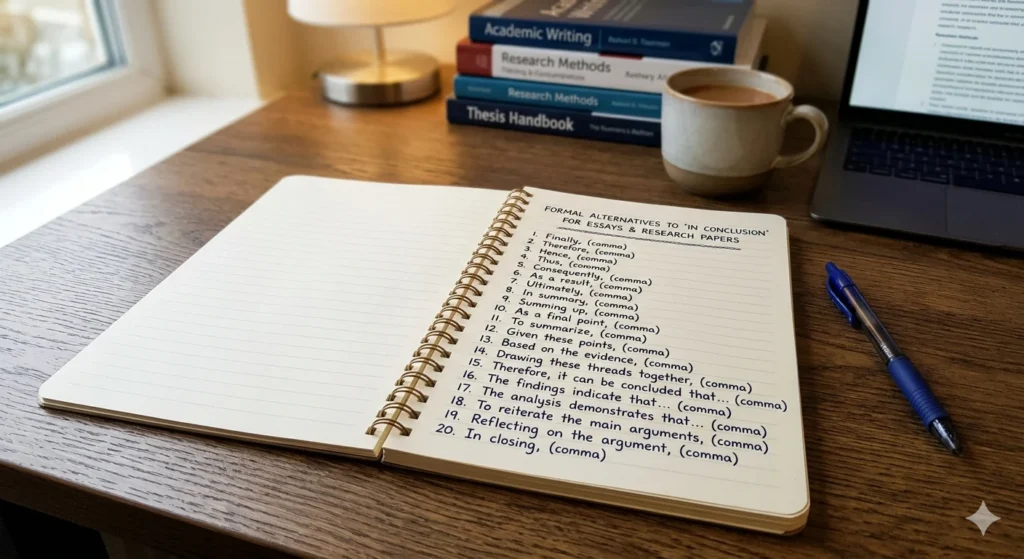
Here are some useful options:
- To bring this discussion to a close, the evidence clearly supports this viewpoint.
- Based on the points discussed, it is clear that this subject deserves attention.
- The findings suggest that this issue has several important factors.
- This analysis reveals the significance of understanding the topic deeply.
- The evidence presented throughout this paper shows a clear connection.
- After examining these ideas, we can recognize the importance of this subject.
- These observations lead to the conclusion that further discussion may be valuable.
- The research discussed above provides a strong foundation for understanding this topic.
- Reviewing the main arguments, we can see why this matter remains important.
- The overall findings emphasize the need for continued awareness.
- From the discussion above, it becomes evident that this topic has lasting effects.
- Reflecting on the information presented, this conclusion becomes clear.
Many academic writers use transition phrases instead of simply writing “in conclusion” because it creates a smoother reading experience.
Creative Ways to End a Speech or Presentation
A speech ending should feel memorable. A strong closing line can inspire your audience and make your message stay with them.
Try these alternatives:
- As we reach the final thought, remember that every action creates change.
- Before we finish, let us remember the lesson behind these words.
- To leave you with one final thought, meaningful efforts always matter.
- As we close this conversation, let us carry these ideas forward.
- The message we should remember is simple: small steps create big results.
- With that said, the journey toward improvement continues.
- As we move forward, these lessons can guide our future decisions.
- The final takeaway is that knowledge becomes powerful when it is applied.
- Before we end, consider how these ideas can make a difference.
- This brings us to an important reminder about growth and progress.
- In the end, what matters most is the impact we create.
- Let this be a reminder that every voice has value.
Around the world, people have always used storytelling and speeches to share wisdom. Modern platforms like online presentations and social media have made memorable endings even more important.
Simple and Natural Alternatives to In Conclusion
Sometimes you do not need a complicated phrase. Simple words often create a more personal and friendly connection with readers.

Here are easy alternatives:
- Finally, we can see why this matters.
- In the end, everything comes down to understanding the main idea.
- To wrap things up, these points explain the situation clearly.
- Overall, this information gives us a better perspective.
- At last, we understand the importance of this topic.
- To finish, let us remember the key message.
- Simply put, these ideas show the bigger picture.
- When all is said and done, the lesson remains valuable.
- The main point is that every choice has an effect.
- After everything we have discussed, the answer becomes clearer.
- As we finish, these thoughts bring the discussion together.
- This brings us to the final message.
Simple endings are especially useful for blogs, emails, casual articles, and online content where readers prefer a natural tone.
Academic Synonyms for In Conclusion
Writers often look for in conclusion synonym for research because academic documents need variety while maintaining professionalism.
Some strong alternatives include:
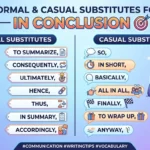
- In summary
- To summarize
- Overall
- Ultimately
- In closing
- To conclude
- In final consideration
- Upon reviewing the evidence
- Based on the discussion
- The final observation is
- The results indicate
- The analysis confirms
- The discussion demonstrates
For example:
Instead of writing:
“In conclusion, climate change affects communities worldwide.”
You can write:
“Overall, climate change continues to influence communities worldwide in significant ways.”
This small change makes your writing sound smoother and more professional.
Powerful Transition Words Instead of In Conclusion
Transition words guide readers from one idea to another. A good closing transition helps signal that your article, essay, or speech is coming to an end.

Useful transition words include:
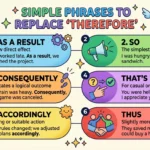
- Ultimately
- Therefore
- Thus
- Finally
- Overall
- Consequently
- In short
- To summarize
- In brief
- All things considered
- For these reasons
- As a result
- Taking everything into account
These phrases work well in essays, reports, presentations, and professional documents.
For example:
“Ultimately, effective communication helps people share ideas more clearly.”
“Taking everything into account, this solution offers the best possible outcome.”
Choosing the right transition depends on your writing purpose and audience.
Best Alternatives to In Conclusion With Examples
Understanding how to use alternatives makes your writing stronger. Here are examples for different situations:
For an essay:
- “To summarize the discussion, this topic reveals the importance of careful decision-making.”
For a research paper:
- “The findings presented above demonstrate the need for additional studies.”
For a speech:
- “As we close today’s discussion, let us remember the importance of teamwork.”
For a report:
- “Overall, the results show positive progress toward achieving the goal.”
For a blog post:
- “At the end of the day, choosing the right words helps your message connect with readers.”
For an email:
- “To wrap things up, I appreciate your time and support.”
For everyday communication:
- “In the end, what matters most is the effort we put into our goals.”
A good ending does not simply stop the conversation. It gives readers a final thought to remember.
Frequently Asked Questions
What can I say instead of “in conclusion”?
You can use phrases like “to summarize,” “overall,” “ultimately,” “in closing,” “to wrap things up,” or “all things considered.” The best choice depends on whether you are writing an essay, speech, report, or casual message.
How do you say “in the end” formally?
Formal alternatives include “ultimately,” “in the final analysis,” “after careful consideration,” and “taking everything into account.”
What is another way to say so in conclusion?
Instead of “so, in conclusion,” you can write “therefore,” “ultimately,” “based on these points,” or “as a final observation.”
What is a good transition word for “in conclusion”?
Strong transition words include “finally,” “overall,” “ultimately,” “therefore,” and “to summarize.”
Another way to say in conclusion professionally?
Professional alternatives include “in summary,” “to conclude,” “the key takeaway is,” and “the final analysis shows.”
How to say in conclusion in an essay?
In an essay, you can use phrases such as “to summarize the main points,” “the discussion above demonstrates,” or “ultimately, this evidence suggests.”
What to say instead of in conclusion in an essay?
You can write “overall,” “after examining these points,” “based on the evidence,” or “the final perspective is.”
What is an in conclusion synonym for research?
Research writing often uses “the findings indicate,” “the analysis reveals,” “the results demonstrate,” and “overall.”
How to say in conclusion in a speech?
For speeches, natural options include “before we finish,” “as we close,” “one final thought,” and “the message to remember is.”
What is another word for conclusion in a report?
You can use “summary,” “final remarks,” “closing statement,” “final analysis,” or “overall findings.”
What does in conclusion mean?
“In conclusion” means that the writer or speaker is presenting the final thoughts, summary, or main takeaway after discussing a topic.
Conclusion
Choosing the right closing phrase can transform ordinary writing into something more memorable and professional. Whether you are completing an essay, research paper, speech, or blog post, using an other way to say in conclusion helps your message feel fresh and engaging. The right ending gives readers clarity and leaves a positive impression. Try different conclusion phrases based on your audience and purpose, and you will create stronger, more natural communication every time.

“Anita Brookner is a creative author at Replyera.com, writing heartfelt wishes, thoughtful replies, and meaningful messages that connect emotions with words.”